


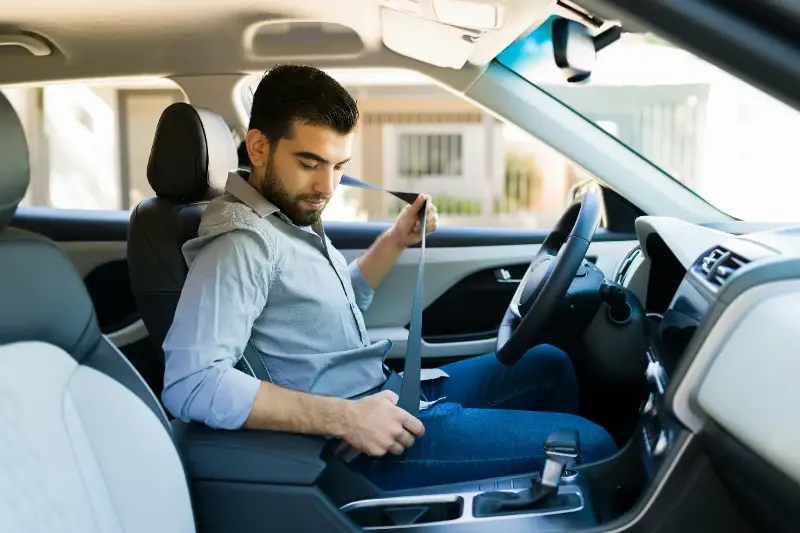
Every time you step into your vehicle and buckle up, you are taking part in a truly remarkable journey—a decades-long story of innovation dedicated entirely to saving lives. Automotive safety has evolved from basic mechanical restraints into an era of cutting-edge sensors and artificial intelligence.
These milestones have dramatically reduced road incidents, transforming driving into a much safer experience for everyone. Modern technology continues to revolutionize the way we stay protected on the road, turning vehicles into highly intelligent protective shields.
THE HUMBLE BEGINNINGS OF AUTOMOTIVE PROTECTION
Long before modern vehicles could anticipate collisions or react to dangers on their own, automotive safety started with one beautifully simple invention: the three-point seatbelt.
- A Gift to the World: Invented in 1959 by Swedish engineer Nils Bohlin, this single device is widely considered the most important safety feature ever designed.
- Life-Saving Statistics: The World Health Organization estimates that seatbelts reduce the risk of death in a crash by up to 50% for front-seat occupants.
- Prioritizing Lives Over Profit: In an extraordinary act of goodwill, the patent was made completely open to all competing automakers, ensuring this life-saving technology could protect everyone globally.
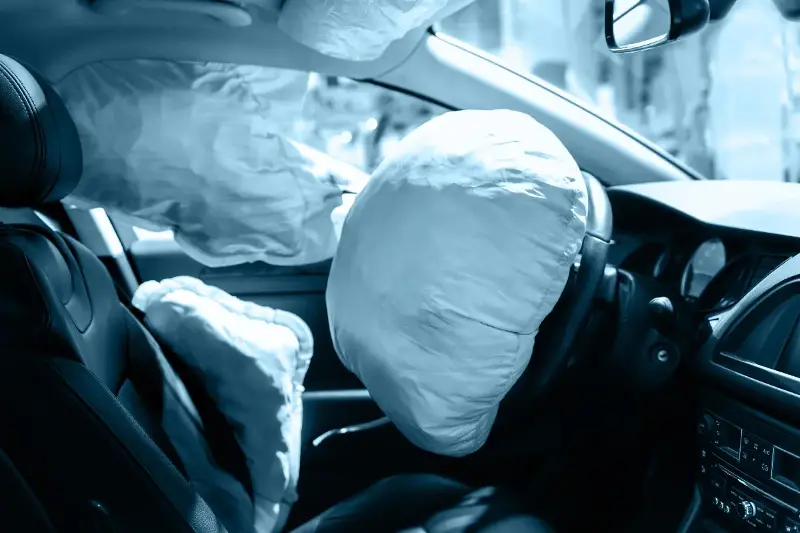
In the 1970s, airbags entered the scene, adding a crucial secondary layer of protection. By rapidly inflating during an impact, they cushion passengers from severe forces, significantly improving survivability rates in high-impact scenarios.
BEYOND BRAKES: MAINTAINING VEHICLE CONTROL
As vehicles grew faster and highways busier, engineers looked for ways to help drivers maintain precise steering control during critical, unexpected moments:
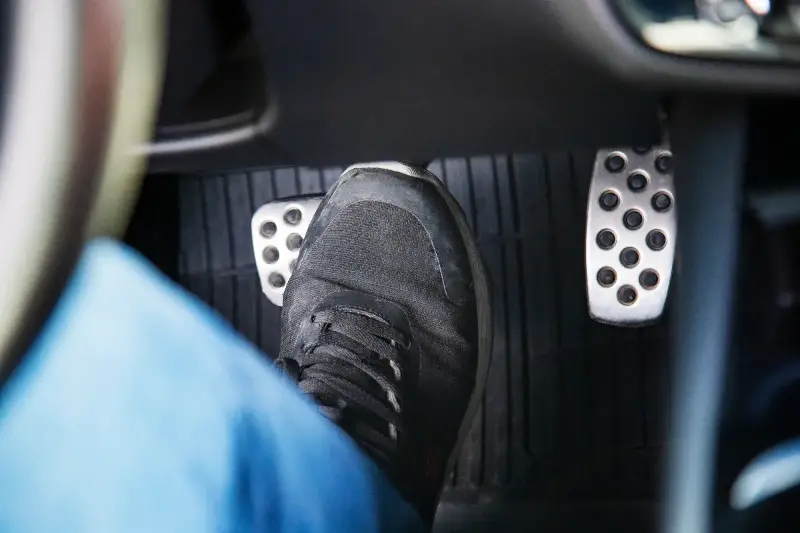
- Antilock Braking Systems (ABS): Mainstreamed in the 1980s, ABS prevents wheels from completely locking up during emergency braking, allowing drivers to steer smoothly around obstacles instead of skidding helplessly.
- Electronic Stability Control (ESC): Introduced in the 1990s, ESC uses a smart network of sensors to detect when a vehicle is beginning to lose traction. It automatically applies individual brakes to specific wheels to pull the car back onto its intended path. Studies credit this invisible co-pilot with reducing single-vehicle fatal incidents by more than 50%.
SENSING DANGER: THE POWER OF SMART SENSORS
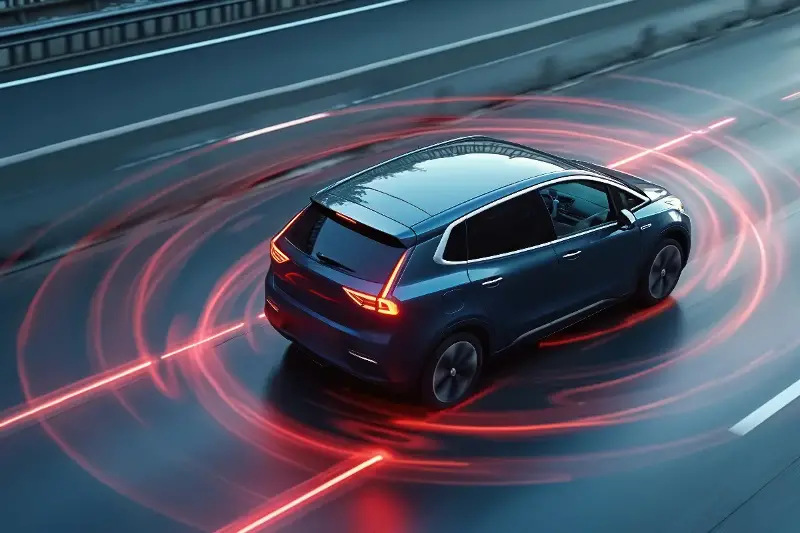
The past two decades have witnessed a massive technological leap in how vehicles monitor their surroundings. Modern automobiles boast an entire suite of advanced hardware—including high-resolution cameras, radar, infrared, and even LiDAR.
These tools form the backbone of three essential preventative features:
- Blind Spot Monitoring: Visually or audibly alerts you if another vehicle is lurking just out of your line of sight.
- Lane Departure Warnings: Gently notifies you if the vehicle begins to unintentionally drift across highway lines.
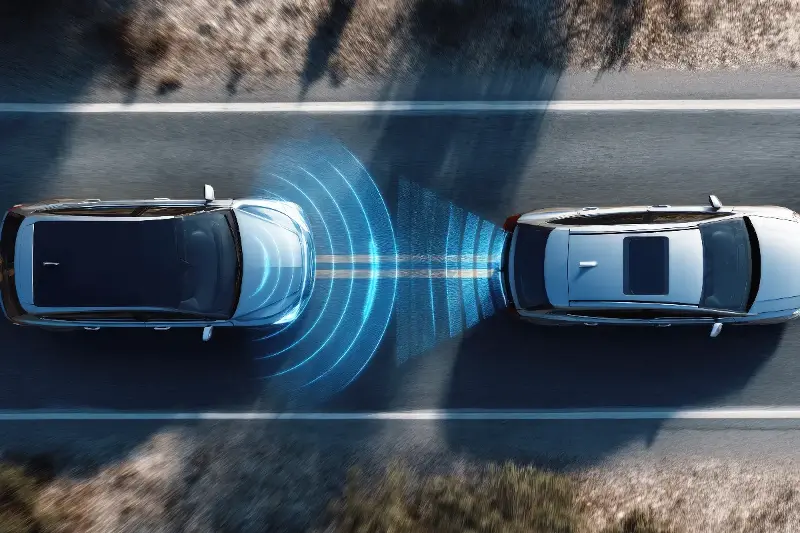
- Forward Collision Warnings: Detects slowing traffic ahead and automatically applies emergency braking if you do not react in time.
According to data from the Insurance Institute for Highway Safety (IIHS), vehicles equipped with automatic emergency braking are involved in nearly half as many rear-end collisions compared to those without it.
THE RISE OF ADVANCED DRIVER ASSISTANCE SYSTEMS
Today’s automobiles possess intelligent capabilities that would have sounded like pure science fiction just a generation ago. Advanced Driver Assistance Systems (ADAS) combine data from multiple sensor arrays to make everyday commuting comfortable and stress-free.
Adaptive cruise control, for example, automatically matches the flow of traffic by accelerating and braking dynamically. Meanwhile, advanced processing algorithms power pedestrian detection and night vision systems, mapping out hazards—such as a cyclist in low-light conditions—long before human eyes can spot them.
A GLIMPSE INTO A CONNECTED FUTURE
The next grand frontier of road safety relies heavily on seamless communication. Vehicle-to-Everything (V2X) technology will soon allow cars to speak directly to one another and to smart city infrastructure. This means your dashboard could alert you to a sudden traffic jam over the crest of a hill or a hidden emergency vehicle approaching an intersection long before they are visible.
From the simple seatbelt to artificial intelligence, the ongoing drive for safety ensures that our shared roads become safer, brighter, and more secure with every passing wave of innovation.