



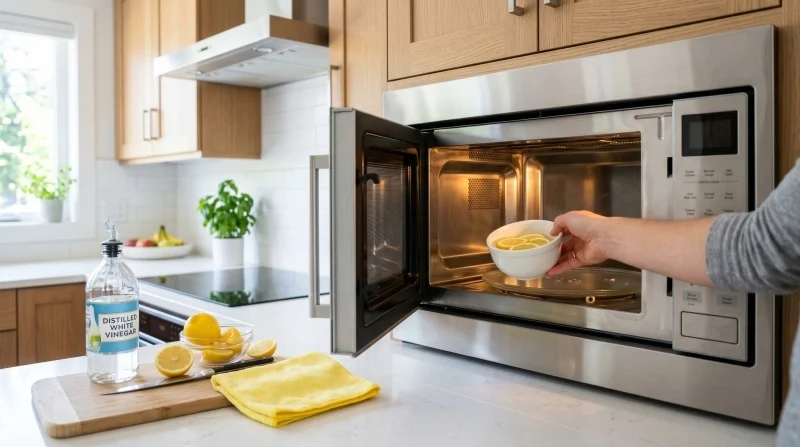
In modern life, microwave ovens are indispensable household appliances, helping to quickly reheat and defrost food. However, during operation, thermal expansion often causes food and grease to splatter and stick to the inside walls of the oven. The enclosed environment, combined with temperature and humidity, quickly turns these deposits into ideal breeding grounds for bacteria, creating unpleasant odors that directly affect the taste of subsequent dishes.
Faced with this situation, many housewives often resort to using metal scouring pads, stiff brushes, or strong cleaning chemicals to scrub. From a technical standpoint, this is a serious mistake. The coating inside the microwave oven cavity is specially designed to reflect microwaves. Vigorous scrubbing will create microscopic scratches. When this protective layer is broken, the underlying metal surface is exposed, which can cause electrical sparks during operation, posing a risk of short circuits and reducing the lifespan of the appliance.
3 ways to clean your microwave without scrubbing hard.
To solve this problem, the principle of steam softening combined with natural catalysts is key. Below are three methods for deep cleaning your microwave oven that are safe and require absolutely no strong physical force.
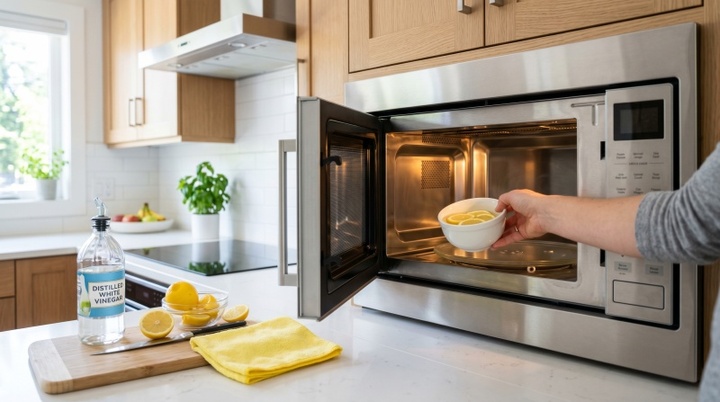
Lemon and white vinegar are both mild cleaning agents that can be used in a microwave oven. (Photo: JC)
Method 1: Clean your microwave with fresh lemon.
Fresh lemons are not only a spice but also an excellent biological cleaner thanks to their abundant natural citric acid content. This method is particularly effective for microwave ovens that have absorbed the fishy smell of seafood or the strong odor of heavily spiced foods.
How it works: When the lemon juice solution is boiled inside the oven, the steam carries citric acid molecules that penetrate every nook and cranny. The heat expands the structure of dried-on grease and grime, while the acid breaks down their bonds, causing the stains to automatically detach from the oven walls.
Procedure:
- Prepare a heat-resistant ceramic or glass bowl and pour in about 200ml - 300ml of clean water.
- Cut a fresh lemon in half, squeeze out the juice and mix it into a bowl of water, then add the lemon peel to the bowl as well. The essential oils from the lemon peel will enhance its deodorizing properties.
- Place the bowl of water in the microwave, turn it to the highest power setting, and microwave for 3 to 5 minutes until the water boils and steam fills the oven cavity.
- The most important step: After the oven turns off, absolutely do not open the oven door immediately. Keep it closed for about 5 to 10 minutes. This waiting period allows steam to condense and thoroughly soften the stains.
Finally, open the oven door and carefully remove the bowl of water. Using a soft, slightly damp cloth, gently wipe the oven walls. You'll find that all the dirt is easily wiped away with just one swipe of the cloth.
Method 2: Using white vinegar to clean the microwave.
If your microwave hasn't been cleaned in a long time and has stubborn, dried-on yellow stains, white vinegar, which contains acetic acid, is a better choice due to its stronger acidity compared to lemon.
How it works: Similar to lemon, vinegar uses the power of steam to soften stains. The advantage of white vinegar is its ability to deeply disinfect and sterilize surfaces extremely effectively, helping to eliminate mold spores lurking in the oven's ventilation channels.
Procedure:
- Mix clean water and white vinegar in a 1:1 ratio (about half a small bowl of each) in a heat-resistant bowl.
- Safety tip: To avoid burns from boiling water suddenly flaring up when you take it out, you can place a wooden spoon inside the bowl of water. Absolutely do not use a metal spoon or a bamboo toothpick.
- Turn on the microwave on high power for 5 minutes.
- Similar to method 1, leave the bowl of water in the oven for about 10 minutes after the oven stops operating.
- Use a soft cloth or sponge to wipe down the oven cavity. If the vinegar smell is strong, don't worry, as it will evaporate completely once the oven cavity is dry, leaving a completely odor-free space.
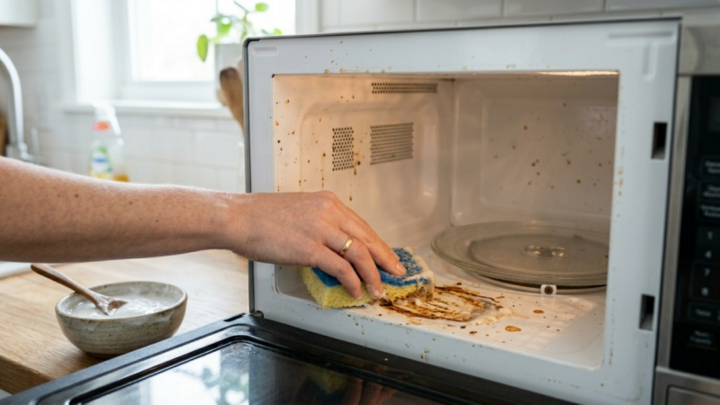
Baking soda will gently wash away stubborn stains without scratching the microwave's protective enamel coating. (Image: NCI)
Method 3: Using baking soda
Baking soda is mildly alkaline and is an excellent chemical compound for neutralizing acids from food and breaking down burnt-on grease stains without the high abrasiveness of industrial cleaning powders.
Mechanism of action: Unlike the two methods above, which mainly use steam, baking soda acts directly on the surface of the stain. When it reacts with water, it creates a solution that can break down the chemical bonds of fats and excess grease.
Procedure:
For general cleaning: Dissolve 2 tablespoons of baking soda in a bowl of water, microwave for 5 minutes, and let it steam infuse, similar to the method using lemon or vinegar. Then wipe clean.
For localized burnt-on stains: Mix baking soda with a little water to form a paste. Apply this mixture directly to stubborn food stains or yellowing on the oven walls. Leave it for 10 to 15 minutes. Then, wipe it clean with a damp cloth. This mixture will gently remove residue without scratching the protective enamel coating.
Notes on cleaning a microwave oven
To ensure the most effective and safest cleaning, users should also note the following operating principles:
- Unplug the microwave: Before cleaning with a damp cloth, always unplug the microwave to completely eliminate the risk of electrical leakage.
- Clean the turntable separately: The glass turntable and the roller ring at the bottom of the oven should be removed, taken to the sink, and cleaned with regular dish soap. Let them dry completely before reassembling them.
- Dry and ventilate: After applying any cleaning method, use a soft, dry cloth to wipe the entire oven cavity again. Leave the oven door slightly ajar for 15-30 minutes to allow the moisture inside to evaporate, preventing rust on metal components.
By applying basic chemical principles using readily available natural ingredients in your kitchen, you can effectively clean your microwave, maintain its perfect condition, protect your family's health, and extend its lifespan in the smartest and most scientific way.