



Not long ago, the Philippines have always been reported as among having the slowest internet in the Sount-East Asian region. While our national broadband average is still nowhere near that of Singapore or Hong Kong, broadband and mobile internet speeds have significantly improved in the last few years.
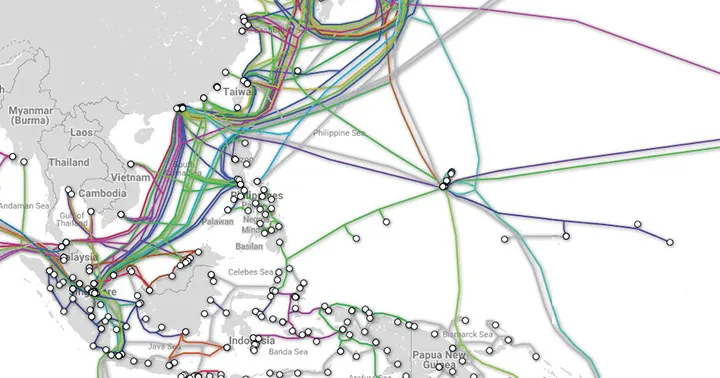
Median fixed-broadband speeds now hover around the mid to high-100Mbps. Mobile data isn’t lagging behind, either. Media cellular download speeds have more thna doubled in recent years, now comfortable sitting at 50-60Mbps bracket nationwide.
For the average consumer, streaming HD video, joining Zoom or Google Meet calls, or playing online games have become a common activity that we do every day.
Why stability matters more than Mbps
The pivot from speed to stability is rooted in how Filipinos actually use the internet. You don’t need 300 Mbps to watch YouTube; 10–15 Mbps is more than enough for a smooth HD stream (25-50Mbps for 4K Netflix). What burns you is when the connection suddenly sputters, freezes, or drops entirely in the middle of a work call, a bank transaction, or an online exam.
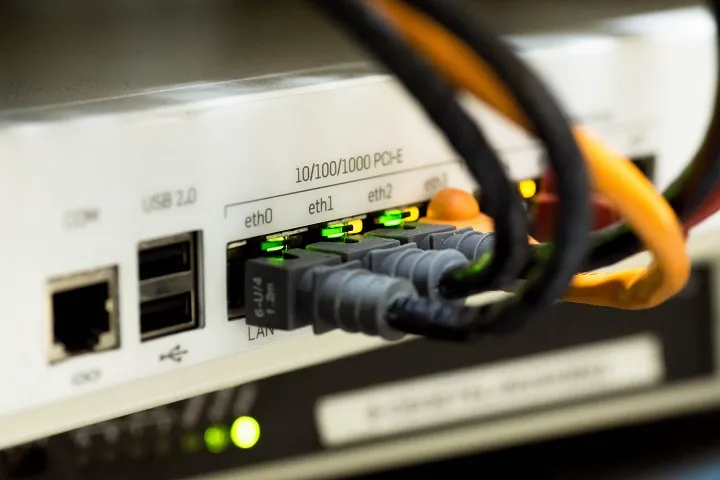
Consumer advocacy groups have long pointed out that most complaints to ISPs and regulators are about consistency, not speed. Users report dropped mobile data in crowded areas, failed digital payments when the signal dips, or video calls freezing during peak evenings. These issues are less about “last mile” throughput and more about network resilience, congestion management, and infrastructure density.
From a technical standpoint, stability is defined by several intertwined factors: latency consistency, packet loss, jitter, and uptime under load. A plan that “tops” at 100 Mbps but regularly hits 10–20 Mbps during peak hours, with frequent disconnects, is worse in practice than a 50 Mbps plan that holds steady all day.
This is why regulators and industry watchers are starting to push for metrics that emphasize quality of service (QoS) and quality of experience (QoE), not just peak speed.
Where the network still breaks
Despite impressive headline numbers, the Philippine broadband landscape remains uneven. Urban centers like Metro Manila, parts of Cebu, and selected cities in CALABARZON enjoy relatively better fiber coverage and high‑speed options. But outside these areas, many users still contend with spotty mobile data or borderline‑usable fiber alternatives.
Key pain points include:
- Congestion in dense areas High user density in residential towers and business districts can strain existing backhaul and aggregation points, leading to slowdowns and instability even when the “last mile” is fiber‑ready.
- Weather‑induced outages. Typhoons, heavy rains, and power disruptions continue to knock out towers, street cabinets, and submarine links, especially in flood‑prone or rural areas.
- Underbuilt backhaul and transit. Some regions still rely on weaker or older transport networks, meaning even if the local ISP offers a fast plan, upstream bottlenecks can create jitter, latency spikes, and inconsistent service.
In short, the infrastructure base is good enough to deliver speed; it’s the resilience and redundancy that often lag behind.
The shift in regulatory and industry focus
Recognizing this reality, the government and industry are beginning to shift their language and priorities. The Department of Information and Communications Technology (DICT), thru Sec. Henry Aguda, has publicly stated that speed is no longer the primary bottleneck; the challenge now is ensuring reliable, consistent, and affordable connectivity for all Filipinos.
Consumer advocacy groups have urged regulators to refocus broadband regulation from headline speed commitments to concrete quality‑of‑service standards such as guaranteed uptime, latency ranges, and penalties for chronic instability. There’s also a push to treat “quality of experience” (how users actually perceive performance) as a core metric, not just raw technical parameters.
For ISPs, this means:
- Designing networks with more redundancy and over‑provisioning, especially in peak‑usage areas.
- Investing in better backhaul and peering arrangements to reduce upstream bottlenecks.
- Improving last‑mile cabling and power‑backup systems to reduce weather‑related outages.
What We (Consumers) Should Really Look For
If you’re choosing or upgrading a broadband plan today, raw Mbps numbers are only part of the story.
Here’s what to look for:
Peak‑hour performance. Ask neighbors or check local communities: Does the connection stay steady after 7 PM? Does it recover immediately after a brief outage? These are better indicators of real‑world stability than a one‑time speed test.
Latency and jitter. For gamers, remote workers, and online traders, low and consistent latency matters far more than a higher speed tier. Spikes from 15 ms to over 100 ms will ruin real‑time applications even if the bandwidth is technically fine.
Network architecture. Fiber‑to‑the‑home (FTTH) is generally more stable than under heavy load because it’s less prone to shared medium issues. Some local ISPs even offer Fiber-to-the-Room (FFTR) already (see here).
Outage history and support. How quickly does the ISP respond when the line goes down? Are there SLAs or compensation schemes for prolonged outages? These are early signs of whether the provider actually prioritizes reliability.
For many Filipinos, a slightly slower but rock‑solid 100 Mbps line is now more desirable than a “300 Mbps” plan that feels like a slot machine every evening.
What We (Consumers) All Should Demand
The broader ambition is clear: the Philippines wants to be a top‑tier ASEAN connectivity hub, with a Php 6 trillion digital infrastructure plan aiming for faster, cheaper, and more reliable networks nationwide. But no amount of fiber or spectrum allocation will feel transformative if the average household still grapples with spotty Netflix streams, dropped Zoom calls, failed mobile‑banking sessions, or unstable online‑learning streams. And, for most young Filipino kid or gamer, it could be as simple as how good the “ms” (ping time) of their Mobile Legends session is.

In this new era, the real benchmark isn’t how high your speed test can spike. It’s whether your connection behaves like a utility: always there, always predictable, when you need it most. For consumers, regulators, and ISPs, that shift from speed to stability is no longer optional; it’s the only way broadband becomes truly useful for everyday Filipino life.